Concrete driveway building
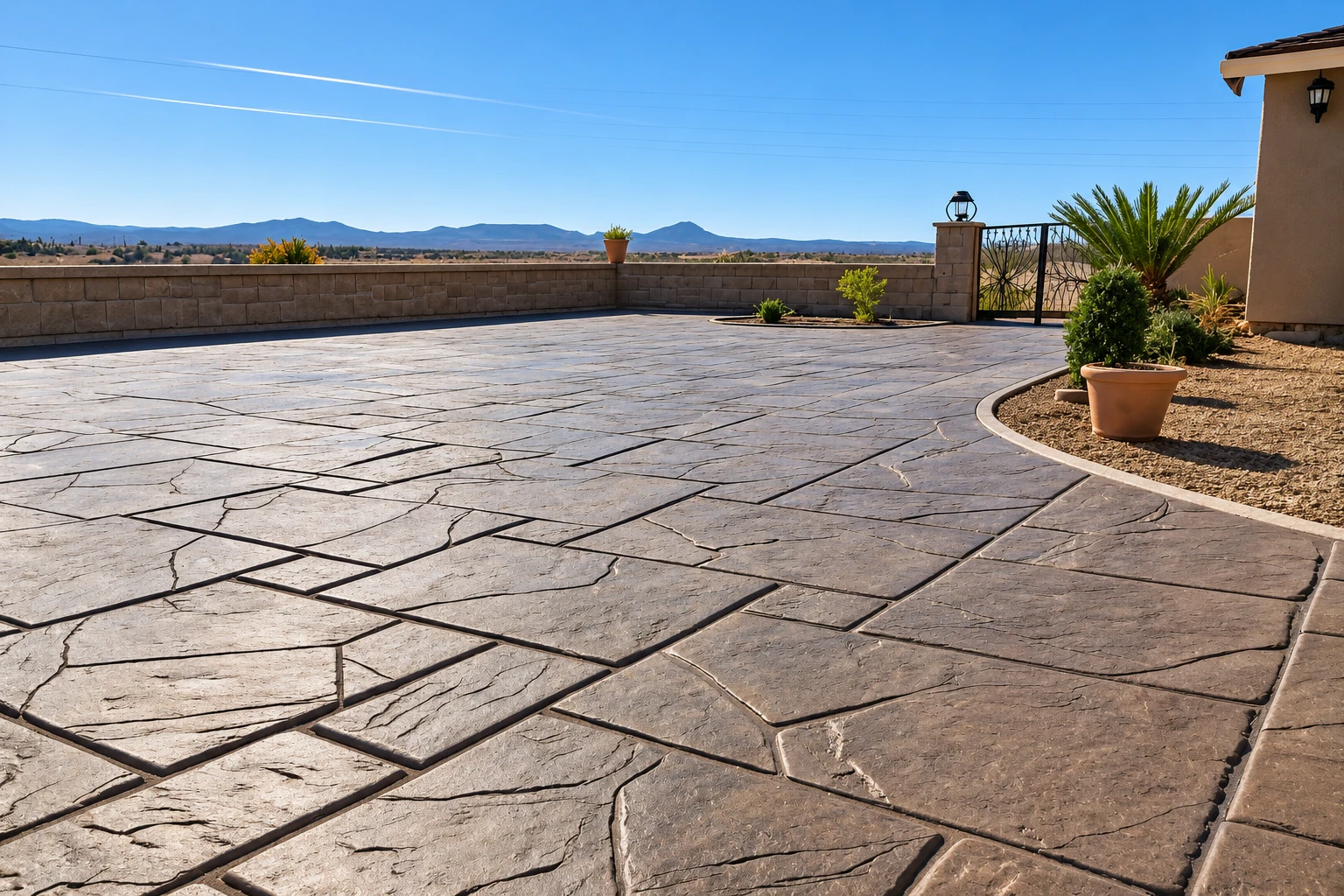
We dig out soft dirt and pack the subgrade, the ground the slab sits on, so your driveway carries trucks without sinking. Long drives off county roads get a close drainage check.
Prattville Concrete is a concrete contractor working in Pike Road, AL. We pour driveways, patios, garage floors, walks and foundations for homes and small businesses here, and we dig out and pack the base before any concrete goes down.
Pike Road sits in northeastern Montgomery County, and the Town of Pike Road is the local government. On our jobs here we see newer houses in planned neighborhoods and older places on open land off the county roads, and both need the same thing first, a base that won't move. We're a concrete contractor based in Prattville, and we do the same work in Montgomery and in Clanton.
Price comes down to the size of the slab, how thick it needs to be, how much soft dirt we have to dig out and replace, whether old concrete comes out first, and the finish you pick, since stamped or decorative work costs more than a broom finish, the light texture that keeps a slab from getting slick. The schedule turns on whether your address needs a permit and when the pour fits our calendar, plus curing, the wait while fresh concrete gains strength before it can take your weight or your car's. You'll get your own number from the estimate at your property.
The base is buried on day one, so it's the first thing people want to trim. I'd rather cut back the finish, because a fancy top on dirt that settles still cracks.
Concrete cracks, so we cut control joints, shallow grooves that give it a line to break along, early enough that the crack follows them and not a path nobody chose.
Before we set forms, we check where rain runs across your lot, so the slab falls away from your house instead of sending water toward the foundation.
We dig out soft dirt and pack the subgrade, the ground the slab sits on, so your driveway carries trucks without sinking. Long drives off county roads get a close drainage check.
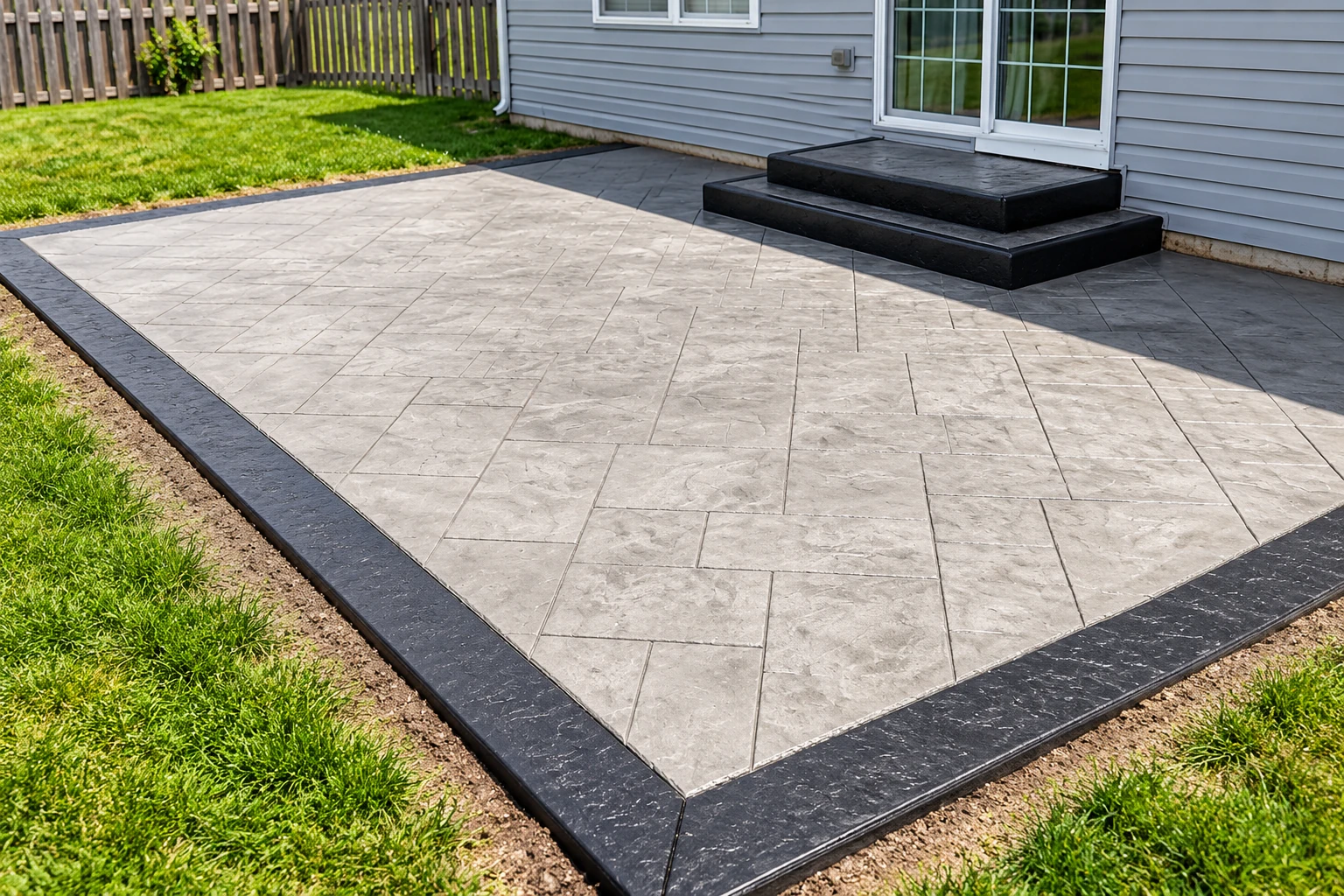
Patios behind newer homes often sit on fill left from building, so we dig until we hit firm ground. We slope the slab away from your back door so water doesn't pool.
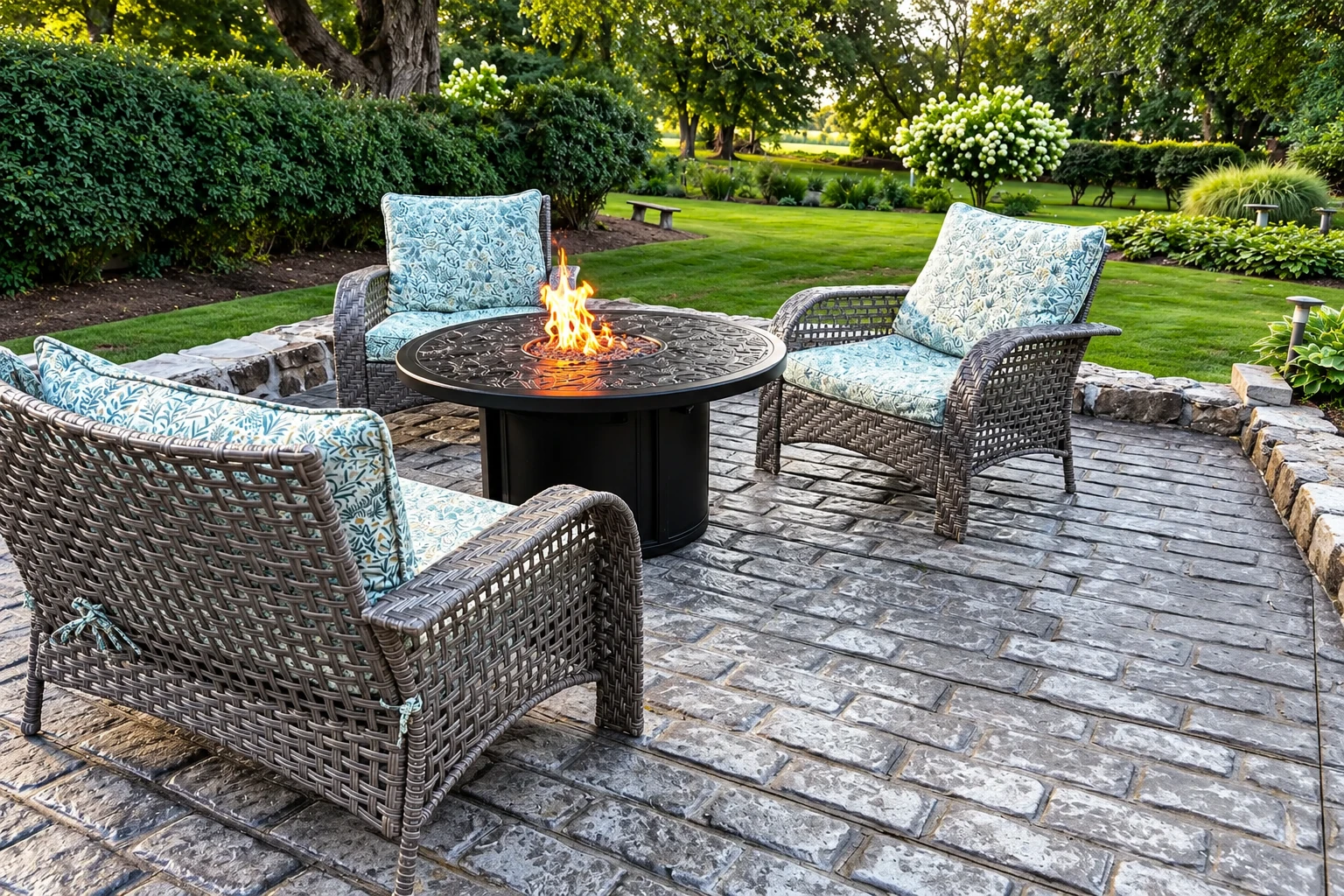
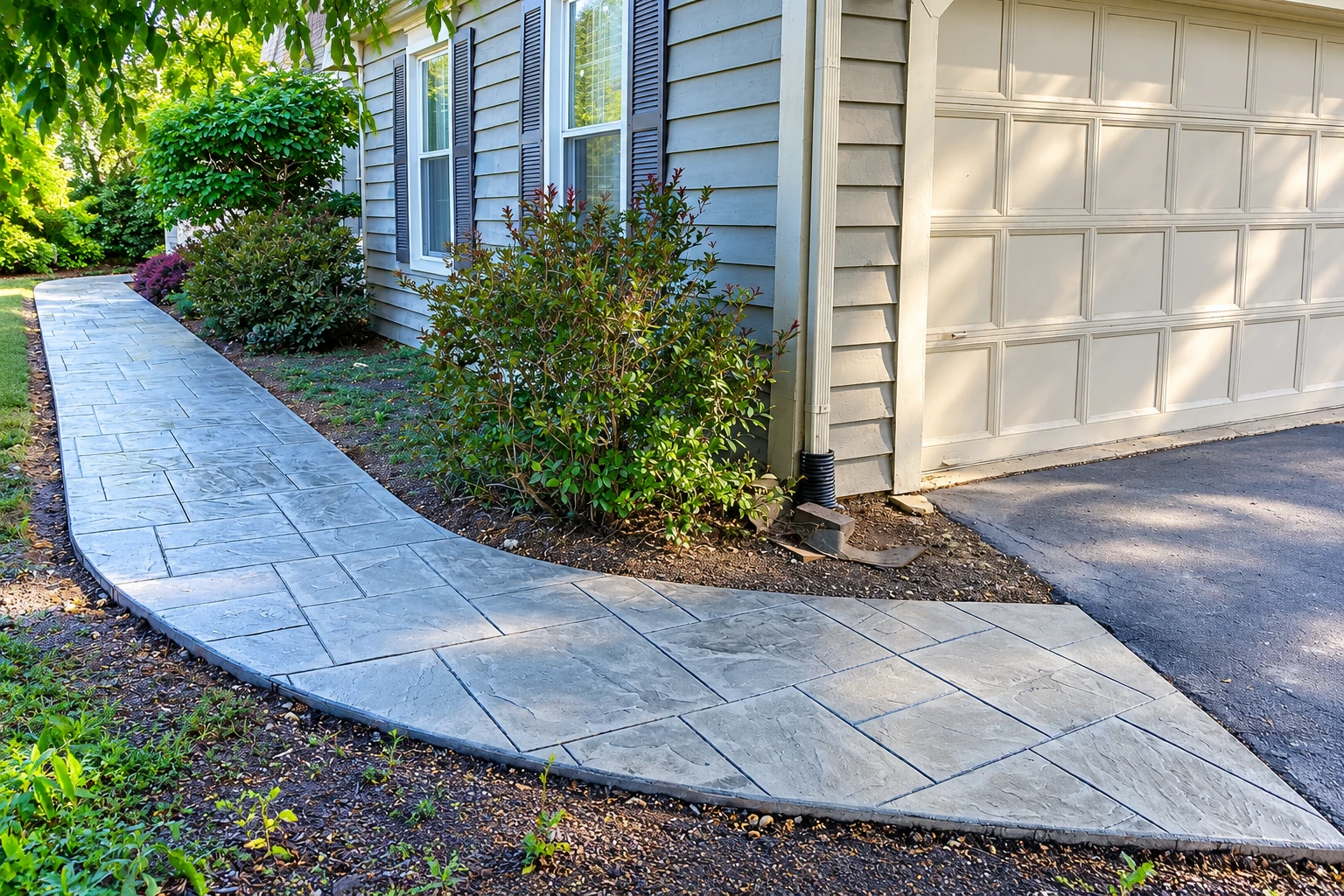
Stamped concrete gets its pattern pressed in while it's still soft, so we bring enough hands to finish before it sets. Pattern and color both move the price.
Front walks take daily foot traffic, so we pack the base and cut joints at even spacing. We set the height to meet your steps and driveway cleanly.
A garage floor has to drain toward the door, not into the house, and carry a parked car. We check the old slab first and tell you if it's worth saving.
Colored, scored or textured finishes dress up an entry or a backyard slab. We put the money into the base first, then talk through which finish fits the budget that's left.
Where a yard drops toward the street, a concrete wall holds the dirt back. We plan where water drains behind it, because trapped water is what pushes walls over.
Interior slabs for shops, barns and additions get the same dug-out, packed base as a driveway. We match the finish to the use, smooth indoors or textured where it gets wet.
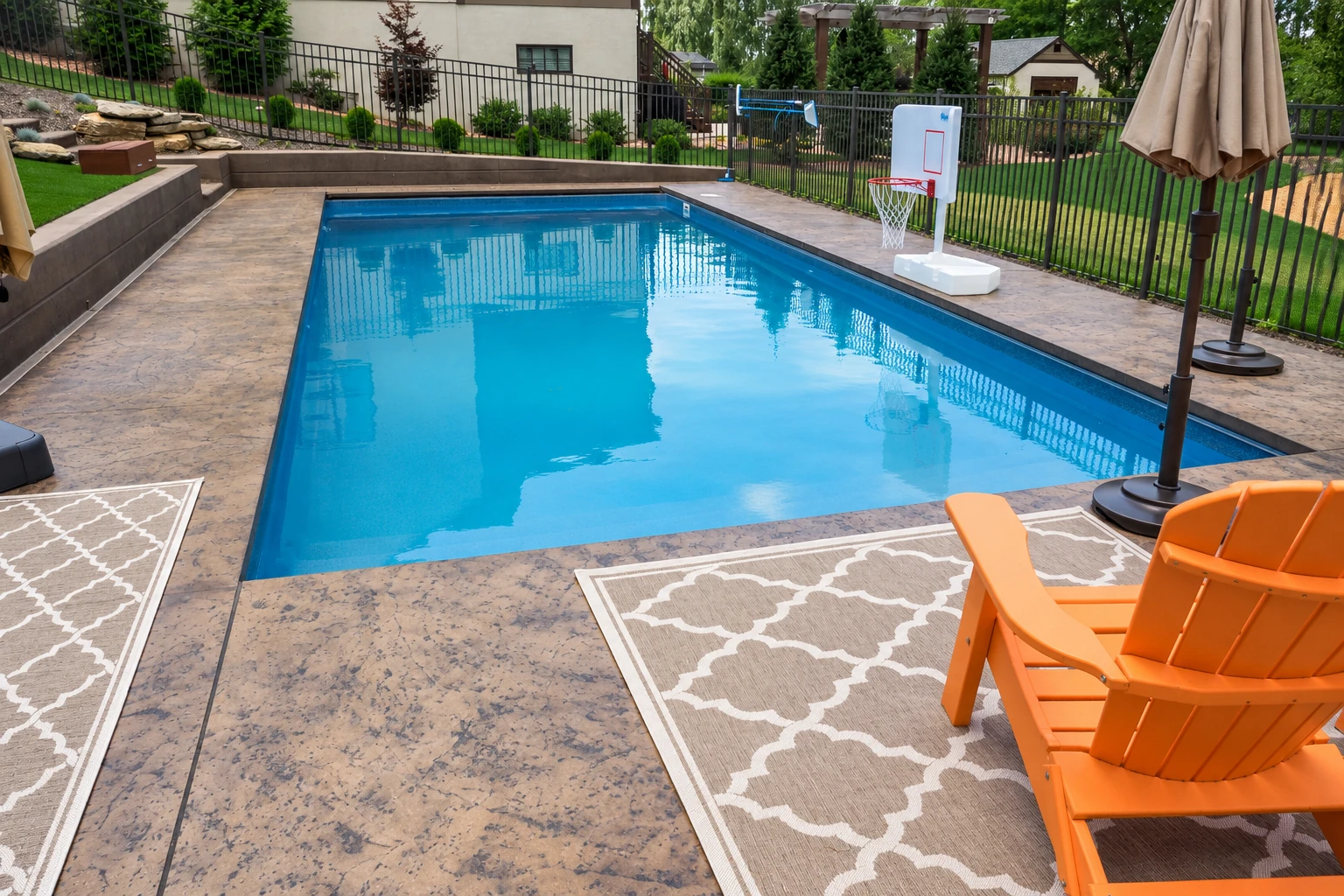
A pool deck needs a finish bare feet can grip and a slope that sends splash water away from the pool and the house. We work around your pool builder's schedule.
Concrete steps need even rises so nobody trips, and footings deep enough that they don't pull away from the house. We often replace steps along with a new walk.
A slab foundation for a shop or addition starts with packed subgrade and rebar, the steel that holds it together if it cracks. We grade so water drains off the pad.
We lay out and pour foundations for additions and outbuildings, checking the ground at the bottom of each trench before concrete goes in. Soft spots get dug out, not covered over.
Small business owners call us for lots and drive lanes that take delivery trucks every day. That weight is why the base and thickness matter more here than on a home driveway.
Footings carry porches, columns, decks and additions, so they go down to firm ground, not loose fill. We check each hole before the pour, since it's the last chance to look.
When a slab or foundation has sunk, we look at why first, usually soft or washed-out ground underneath. Raising it without fixing the cause usually means it sinks again.
We saw-cut old concrete to tie in a new slab, open a path for a line, or remove a cracked section cleanly. Straight edges join new concrete better than broken ones.
Send the form and we'll get back to you within one business day. I come out to look at the job and measure it myself, and the estimate is free with no obligation.
I check how firm the ground is, what old concrete has to come out and how a concrete truck reaches the spot, since each of those changes the work.
We've poured concrete full time since 2013, and we're licensed and insured. Your satisfaction, guaranteed, and that starts with telling you straight what your concrete will and won't do.
I run the work on site with my crew, so the person who measured your job is the one standing there checking the base before the pour.
Here's what Pike Road homeowners usually want to know before a driveway, patio or slab goes in at their house.
Ask before anything starts, because the Town requires a Building Permit to be issued before construction begins, and its permit list doesn't spell out driveways or patios. The building department is the place to ask, and it emails permits after payment. An older Town checklist set a double fee for starting early, so when a job needs a permit, we don't pour until it's in hand.
If you're inside Pike Road's limits or its police jurisdiction, which reaches 3 miles beyond them, start with the Town. Montgomery County requires a permit for any structure over 200 square feet, but only outside the police jurisdictions of Pike Road and Montgomery. We confirm the office before setting a date, and if a permit's needed, we file it or walk you through it.
Yes, when the work is on someone else's house and costs more than $10,000, the state's Home Builders Licensure Board requires a license, renewed every year. That covers homes up to three floors and four units. Inside Pike Road's limits or its police jurisdiction, a business also needs a current Town business license, and contractors should file proof of liability insurance with it.
Concrete can still crack, but usually not like an old slab poured on raked dirt. Most bad cracking starts with a base that settles or joints cut late or skipped, so we dig out and pack the base and cut control joints on time. I'll show you where I expect cracks before we pour and put the joints there.
Each city below has its own page, though they aren't the only places we work. If your address isn't listed, call (334) 788-0315 or send the form and ask.
Call (334) 788-0315 any day from 6 AM to 11 PM, or send your address and the rough size through the form.