Front steps up to the porch
These get used every day and show from the street, so we pitch the treads to shed rain away from the door and line them up cleanly with the porch.
If your front steps are cracked, sinking or holding puddles, we'll build new ones on a packed base pitched so water runs off.
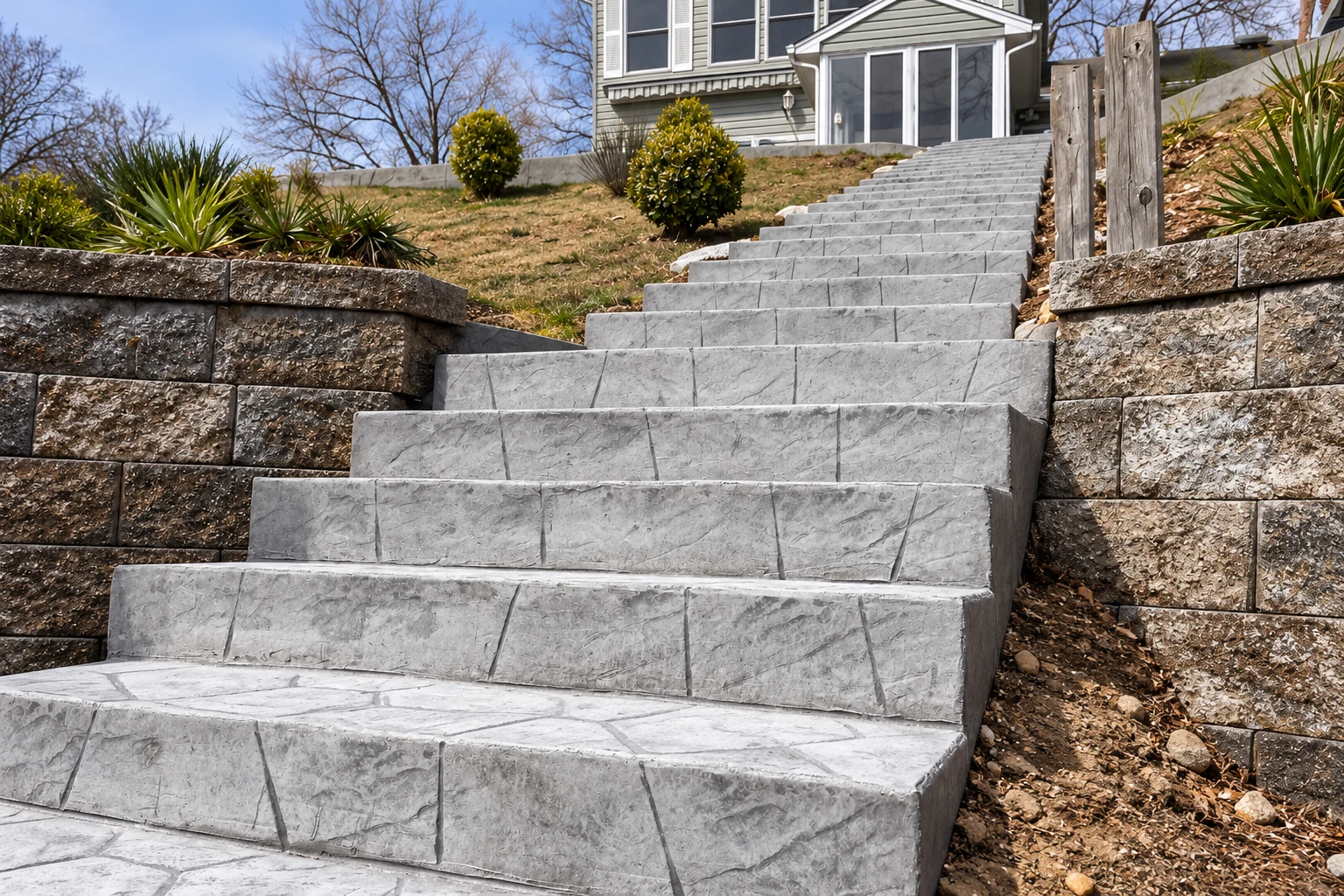
Concrete steps construction in Prattville means building the steps up to your door, porch or patio, either poured on site in forms or made off-site and set in place, on a base and pitch that send rain off the treads instead of letting it sit.
The price mostly comes down to how many steps you need, poured or precast, whether the old steps get broken out and hauled off, and how much base work the ground needs. The schedule turns on the weather, any permit review and, for poured steps, the curing time, which is the wait while new concrete hardens before it can take foot traffic. The estimate gives you the figure for your own entry, not a guess.
I come out to look at your steps and measure them myself, and I'm on site running the work with my crew, so the person who priced it is the one building it.
Concrete cracks, and I'll tell you where your steps are likely to do it and plan for that, rather than promise you something concrete can't do.
We've poured concrete full time since 2013, and before that I learned on weekend sidewalks and small slabs beside older hands, so small entry work is where we started.
At the estimate we go over poured and precast steps with you, and either way the job starts the same. We mark where the steps run, dig out the soft dirt and roots, and pack the subgrade, the ground the steps sit on, because a base that's only raked level settles with the dirt and pulls the steps down with it. That base is hidden on day one, so it's the first thing people want to cut from the budget. It's the last thing I'll cut, because you can redo a surface later but you can't fix a sunken base without tearing the steps out.
Then we set the pitch, a slight fall on each tread away from the house, so rain runs off instead of sitting on the steps or heading back toward your door. Precast steps go down level on that packed base. On poured steps we build the forms, tie in rebar, the steel that holds the concrete together if it cracks, and pour early in the day, since midday heat dries the top too fast and leaves it weak and dusty later. We give the treads a broom finish, a light texture for grip when they're wet, cut control joints, grooves that give a crack a straight place to go, and let the concrete cure before you use it.
Steps meet your house at a porch slab or the foundation wall, so I look at that spot too. If the slab or what's under it needs work first, our crew also handles slab foundation building and foundation installation, and we'd rather fix that first than set new steps against something that's moving.
These get used every day and show from the street, so we pitch the treads to shed rain away from the door and line them up cleanly with the porch.
Back steps often land on a patio or walk, so we check where water runs across both and set it to head away from the house, not back toward it.
Where the yard drops between levels, we set the run of steps to the real grade of the ground and pack the base under every step instead of building on loose fill.
Old steps that sank or split usually sat on a base that was never packed, so we break them out, haul them off and fix what's underneath before we build new ones.
Send the form and we'll get back to you within one business day to set up a visit. I'll come measure your steps on site, and the estimate is free with no obligation.
Tell us the number of steps and where they go, front, back or garage, so I know what kind of job I'm walking up to before I get there.
A few photos of the old steps and the ground around them show me cracks, sinking or standing water ahead of time, so the visit goes straight to the details.
Give us the address and when you're easiest to reach, and we'll call to set up the visit so I can see the slope and drainage at your house.
These photos show finishes and layouts worth talking over, from broom-finished poured steps to precast sets and the walks and landings around them.
Here's what homeowners usually ask us about cost, poured versus precast, permits, licensing and how long new concrete steps should last.
Installed concrete steps across the US usually cost about $100 to $500 per step. That's the market's national range for the installed job, not our price. Your own number comes from the estimate, after I've measured your entry and seen what the old steps and the ground under them need.
Pick poured if your slope is tricky or you want a custom size, and precast if a standard size fits your entry. Poured steps can form one continuous flight with no seams, but they take more labor and a longer cure. Precast needs little curing on site, but trucking limits its size and shape, and setting it takes precise leveling and sometimes crane access.
Prattville's permit list doesn't settle it, so we check with the city's Building Division before we set a date. The division issues permits for all construction the city's codes cover, and its list names additions, fences and outbuildings, not concrete steps. If yours needs one, first review typically takes 3 to 5 days, and we handle the application or walk you through it.
It depends on the job's cost, since Alabama's Home Builders Licensure Board licenses residential builders every year and paid repair or improvement work on a home counts once it costs more than $10,000. We're licensed and insured, and it's a fair question to ask any contractor you're weighing.
Yes, Alabama law lets owners do this work on their own home. The state board warns that owners who claim that exemption put protections at risk, such as consumer complaints and the Homeowners' Recovery Fund. If you hire help and a subcontractor's share of the work runs over $10,000, that subcontractor has to be licensed.
Concrete steps usually last 30 to 40 years with proper care and upkeep, so that long life depends on you keeping up with them. Look them over once a year for hairline cracks, spalling, which is chipped or flaking concrete, and water that isn't draining off. Clean off debris, reseal as needed and fix small damage early, before it grows.
We're licensed, insured and based in Prattville, and we work Millbrook, Pike Road, Clanton and nearby cities, so call (334) 788-0315 or send the form.